
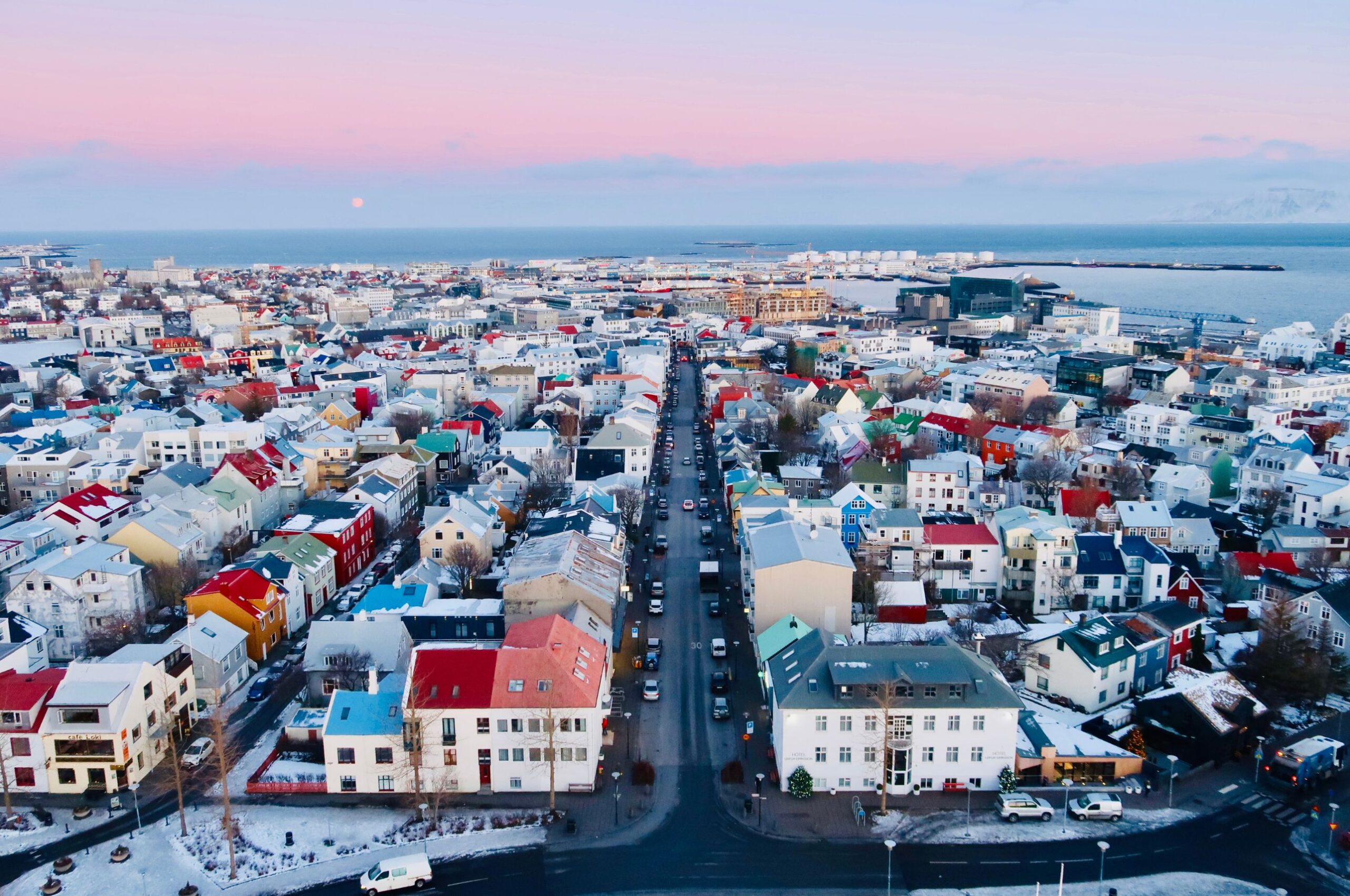

The land of fire and ice and a long history of the almighty Vikings! This country is our absolute number one, it stole our hearts in 2019.
We originally went for what we thought would be a winter season working in a high end lodge, but it actually turned out to be our home for two years and in many ways it still is!
Follow along for our top local recommendations for all adventure explorers in this rugged unique land.
Best Time to Visit
Iceland doesn’t really have 4 seasons as the winters and summers dominate the whole year, you’ll find that spring doesn’t really exist as the winters are so long and harsh, the same goes for Autumn although you will notice a transition with the land changing colours.
A good middle ground for visiting would be from the end of August to October, you’ll get the night time which brings the chances of seeing the northern lights, without freezing your nips off.
Ultimately both seasons are worth visiting as two incredible natural phenomena take place, let’s find out more about this below.
The Midnight Sun
During the months of June- August, the midnight sun occurs, this is when the sun never sets above the horizon, given you endless daylight and perfect opportunities for exploring and making the most of your days.
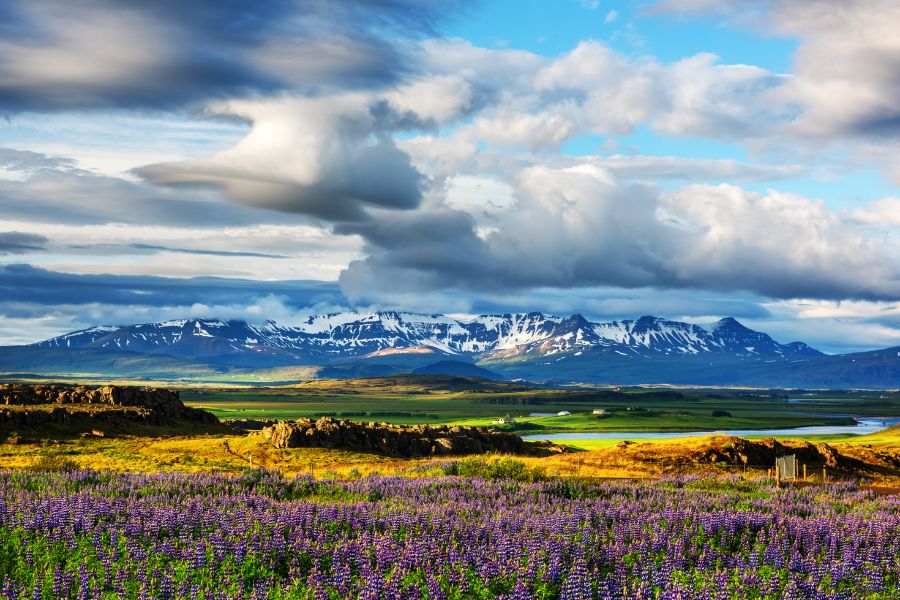
It also allows you to roam around late into the night subsequently avoiding all the heavy summer crowds Iceland attracts every year.
The Polar Night
You might imagine the polar night as a dark, gloomy and cold time of year, why would you want to come to Iceland during the darkness and the cold depths of winter, well let me tell you, although the polar night brings the dark and the cold it also brings the northern lights and all the fun outdoor winter activities.
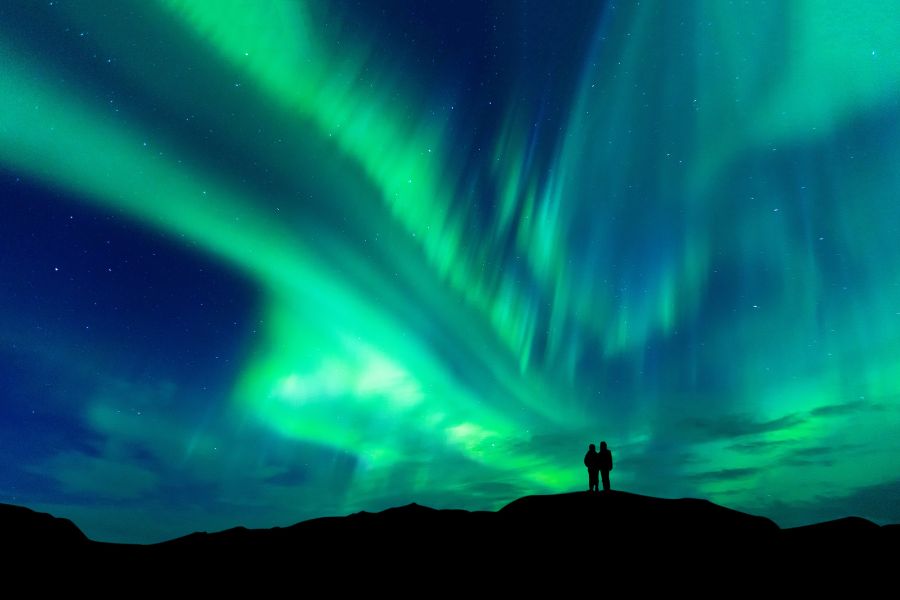
Witnessing the aurora borealis with your own eyes is beyond magical and it’s incomparable to anything else in the world, it’s definitely worth baring the cold for to catch this wonder in action.
Weather and Climate
The weather in Iceland is very unpredictable and it can change in an instant, it’s not a force to be reckoned with and it has taken many lives over the years. Tourists who are not prepared or have not taken the time to actually check the local weather forecast have unfortunately succumbed to mother nature’s power.
When we moved to Iceland in October 2019, that winter was the worst the country had experienced in 25 years, it was absolutely mental, blizzards, electricity blackouts, the harsh Icelandic wind and the most snow we’d ever seen.
We loved it!The excitement and energy of it all kept us on our toes and it added to the many reasons we fell in love with Iceland.
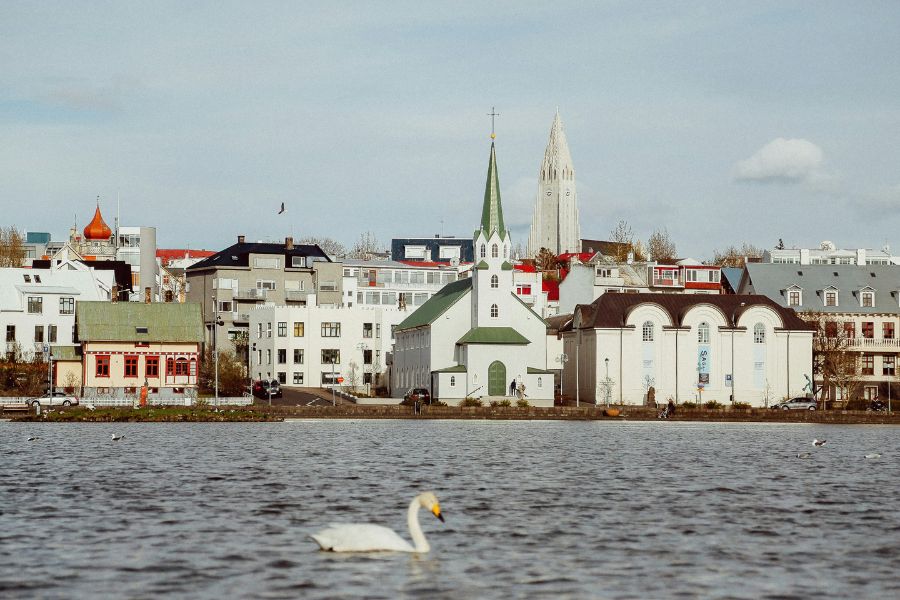
Iceland has a subarctic climate and temperatures in the winter are quite mild in comparison to other Nordic countries, they range from
-1° to 4° during the winter months and during the summer it’s much cooler compared to other countries with similar latitudes, average temps in the summer are around 8°C to 15°C ,but I kid you not we’ve experienced temps up to 26°C where we were literally sunbathing and frolicking on the beach!
The wind, however, can be an absolute bitch, but as the saying goes, there’s no such thing as bad weather, only bad clothing! Layer up and be sure to protect yourself with a windproof jacket and check the weather forecast throughout the day on the Icelandic Met Office website and if you’re driving then check the road conditions on Umferdin.is.
How to Get there
By Air
Travelling by air is the most convenient way, you would fly into Keflavik International Airport which is located about 1.5 hours from downtown Reykjavik, most international flights leave from here.
Several airlines offer direct flights from Iceland to Europe as well as some international flights further afield, like North America for instance. It has never been easier to reach Iceland.
By Ship
If you’re feeling adventurous and you might want to bring your camper van or car, this could be a great option! Be warned it’s not for the faint hearted or the travel sickness crew, it’s a 3 day ship that cruises from Hirtshals in Denmark to Seydisfjordur in the east of Iceland.
This stretch of ocean can be quite choppy and the ship itself is quite basic, but it does of course offer Private Cabins or shared cabins depending on your budget. You could even stop off in the Faroe islands on your way and do a tour of these enchanting lands!
Where to Stay
There are many great places to stay in Reykjavik and it all really depends on the budget you have. As you may have already heard Iceland is not a cheap country to travel around, but there are however some tips and tricks to make it significantly cheaper.
We always stay in Airbnb’s as having a kitchen is a life saver and it can actually cut the cost of your trip quite dramatically, imagine you have a 5 day trip and you have to eat out everyday, breakfast, lunch and dinner, this can be pretty damm expensive! Bag a studio with a kitchen and shop at local supermarkets such as Bonus, this is the cheapest supermarket in the whole country. Check our our money saving Airbnb hacks!
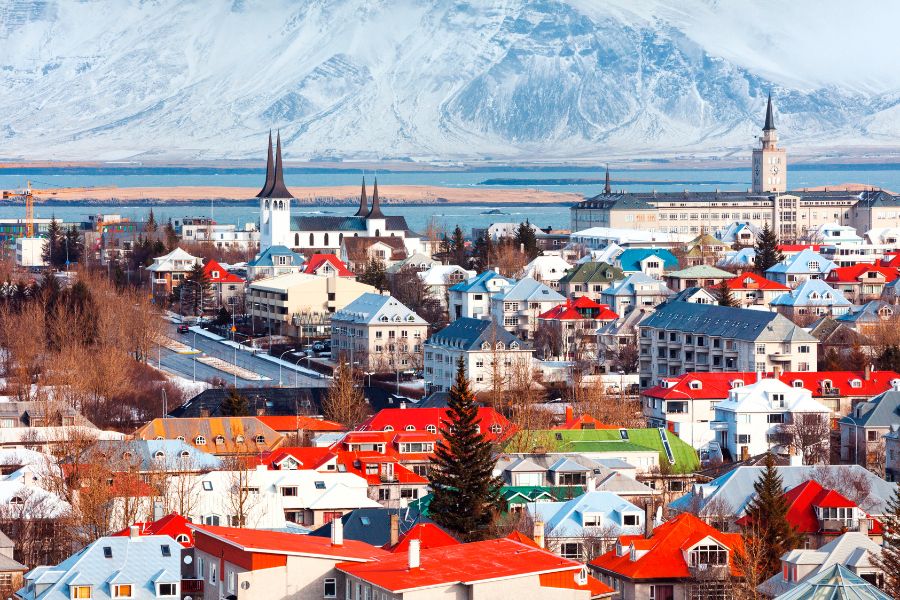
If you want to be in the central downtown area then expect to pay more for your accommodation, we’d recommend staying slightly out of the city centre in east or west of the city, in the more residential areas as this is where you’ll find cheaper accommodation.
If you’re on an even tighter budget then check out the many hostels in and around the city, these also have kitchens so you can still cook for yourself.
Things to Do
Laugavegur and Skolavordustigur Street
Take a stroll along this vibrant street, filled with many boutiques, quirky cafes and endless thrift stores! It’s known as one of the oldest streets in Iceland and it’s located smack bang in the city centre.
The Name of the street literally translates to “wash road” where in olden times it used to lead to a hot spring where local Icelandic women would wash their clothes! How bloody cool is that!
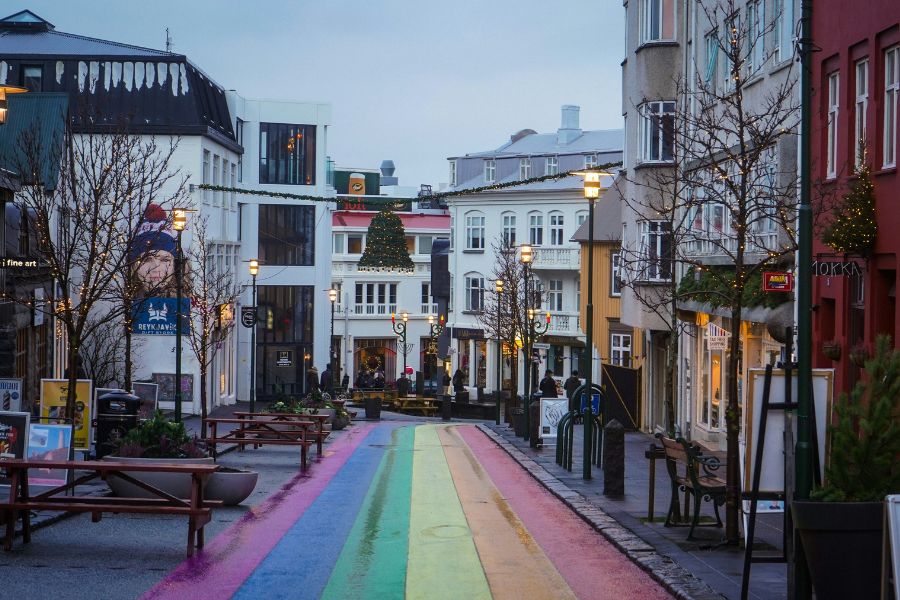
Skolavordustigur Street or rainbow street is another bustling street where you’ll find some of the best restaurants and coffee shops, the vibrant pride flag painted on the street shines in glory to support the LGTBQ+ community.
Iceland is a super gay friendly country, they originally painted the street for gay pride in Reykjavik and they ended up keeping it. We love how open and progressive this country is!
Hallgrímskirkja Church
This church boasts quite a unique shape and it can’t be missed when strolling around the city centre, in fact it’s a great guide to know where you are whilst roaming around Reykjavik, as it stands at an impressive 75 metres tall and can be seen from everywhere.
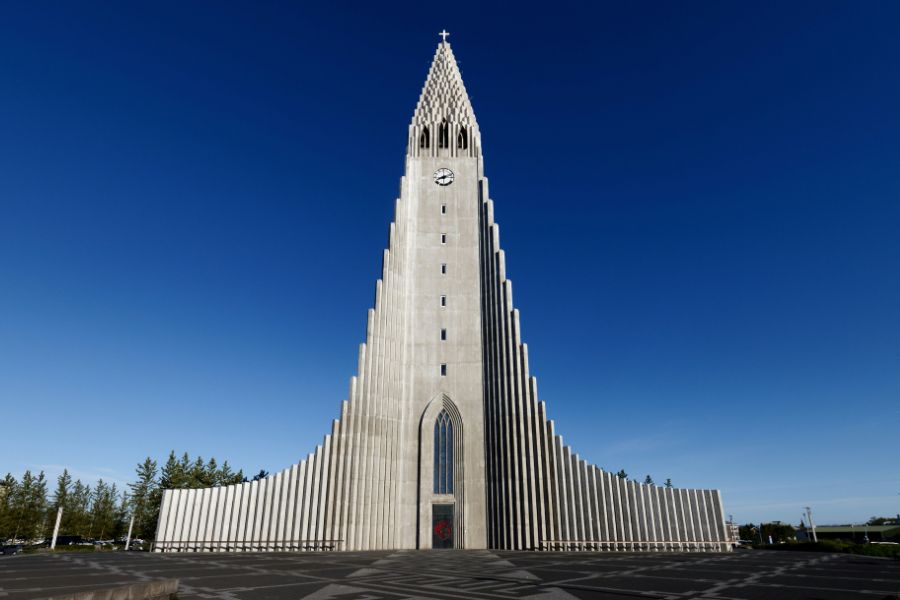
If you’re looking for an epic view point of the city then grab the elevator up, it’s pretty cheap for Icelandic standards at around 1400 ISK which is less than $10 USD.
Its unique architecture was inspired by Icelands rugged, volcanic landscape and it’s something that every visitor should see. Also a little tip, it has free parking!
Soak in a Geothermal Waters
Iceland is known for it volcanoes and geothermal activity, how amazing that most of the country is run from renewable energy, the hot springs are heated by this geothermal activity deep below the Earth’s surface.
Iceland is a spiritual country, the connection to nature and spending more time relaxing and having self discovery journeys are encouraged, the hot springs are a way to help relax your mind and body.
They’re also a very social place and have always played an important part in the community by helping bring people together, a local Icelander told us once ” All important decisions are made in the hot springs”
Close to Reykjavik ,there are two main hot spots to soak your bones and breath in that fresh Icelandic air, just imagine visiting during the darker months and witnessing the Northern Lights from the hot Icelandic lagoon, could it get any better!
Blue Lagoon
The world famous Blue Lagoon is renowned for its turquoise blue water, located in Reykjanes UNESCO Geopark and only 50 minutes from Reykjavik and 10 minutes from Keflavik Airport, it’s on everyone’s bucket list.
It’s literally built on a lava field, adding to the excitement of it all, with the recent eruption destroying the main road, the blue lagoon has built a temporary road but keep an eye on what’s happening there.
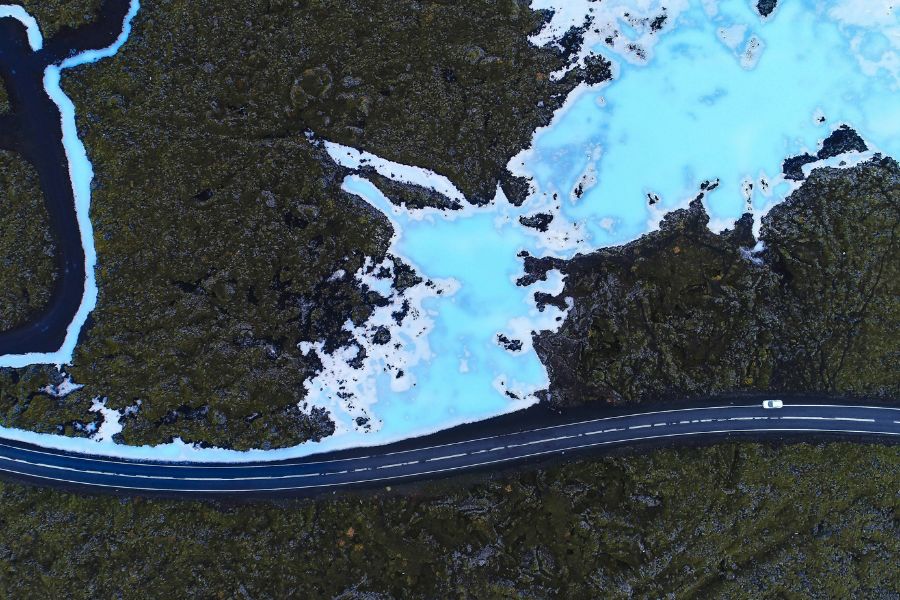
The striking blue colour comes from the high amount of Silica and other minerals in the water, not only does it create a milky blue hue but it makes your skin really smooth like a baby’s bottom!
During your visit you are given some of these clay like minerals as a face mask and it really adds to the spa like experience. There’s also a swim up bar where you can purchase drinks. Cheers to being in one of the best countries in the world! You’ll certainly leave feeling rejuvenated.
Sky Lagoon
The Sky Lagoon is one of the latest geothermal spas, it opened in 2021. Although maybe late to the game Sky Lagoon is 100% worth a visit, with it being only a 13 minute drive from the centre of Reykjavik and the fact it’s accessible by public transport already makes it a big competitor.
Picture this, you’re soaking in perfectly warm & clear water, you swim up to the infinity edge and look out at the vast dark ocean, taking in a deep breath you can feel yourself being cleansed and healed, this is Iceland!
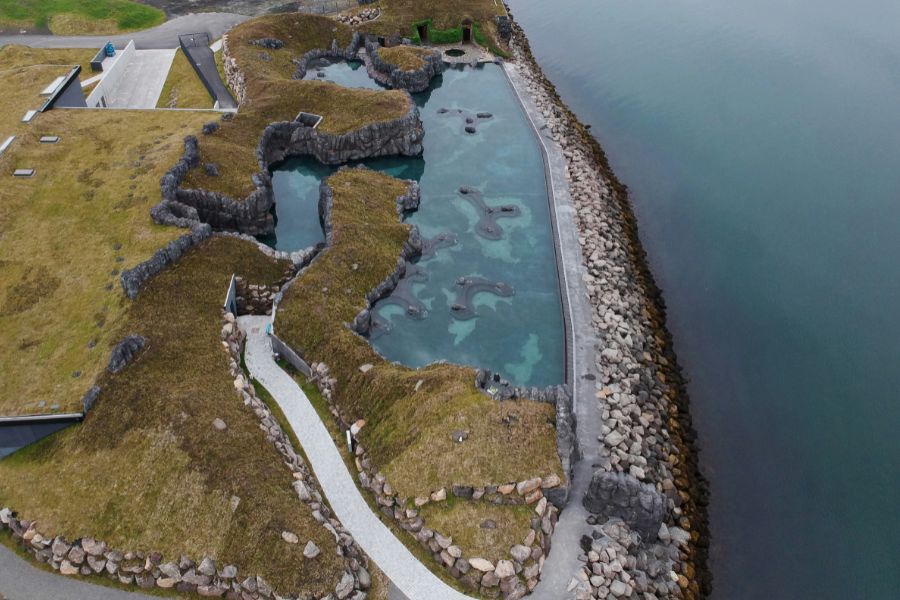
Sky Lagoon offers different packages for your visit, one of them include the seven-step ritual, you’ll get to experience the lagoon, the cold plunge, sauna, cold mist, sky, body scrub, steam and shower. I’m feeling Zen just thinking about it. Take my money!
Secret Hot Spring of Hrunalaug
This is a natural hot spring found close to the village Flúðir, it’s surrounded by nature and probably some sheep, they say there’s more sheep than people in Iceland.
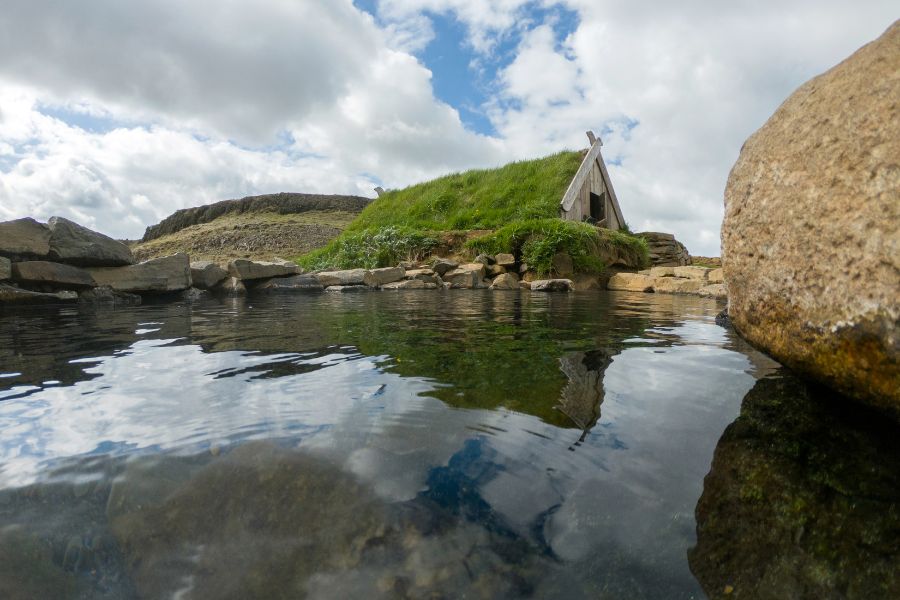
The pool dates back to the 1890’s, it’s rich in minerals and the therapeutic benefits will have you feeling totally relaxed, all the while taking in the natural landscape of the rugged and beautiful Iceland.
Golden Circle
If you’re coming to Reykjavik you’ll most likely have heard of the Golden Circle, it’s a route that can be done in a day if you don’t have much time. Let’s look at a few of the main sights on this tour.
Þingvellir National Park
Þingvellir National Park is a UNESCO World Heritage Site, it played an important part in Icelandic history as it’s the site of the worlds oldest parliament, The Althing, founded in 930 they met in Þingvellir over two weeks a year up until 1798. In the park you can find the ruins of around 50 booths built with turf and stone.
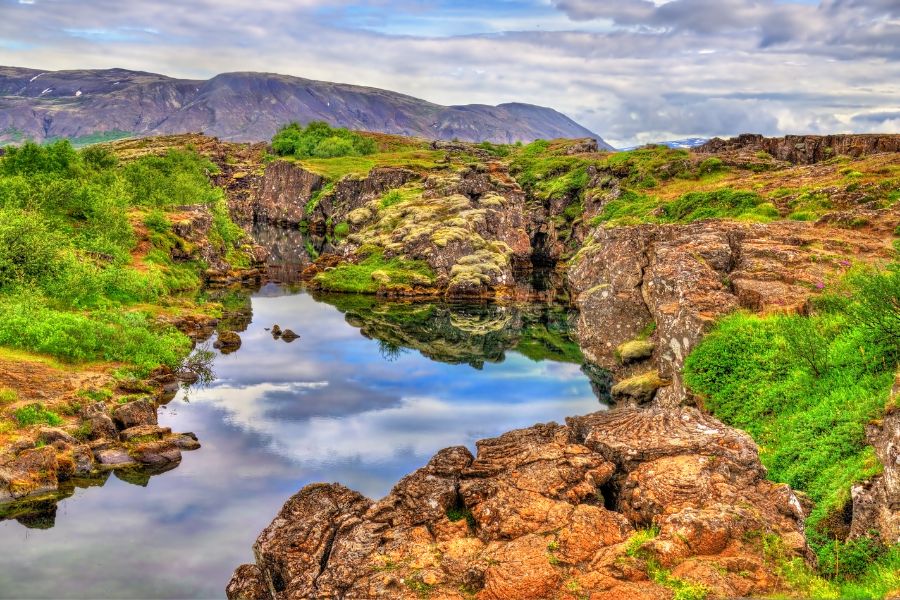
The park is also perfectly located between two tectonic plates, you can book a snorkelling or diving tour to swim between the plates in the Silfra Fissure, what an adventure!
Geysirs
Walking around this geothermal active area, you’ll witness hot springs, just for looking though and the famous Stokkur Geysir that erupts every 10 minutes, shooting water up to 20-30 metres in the air.
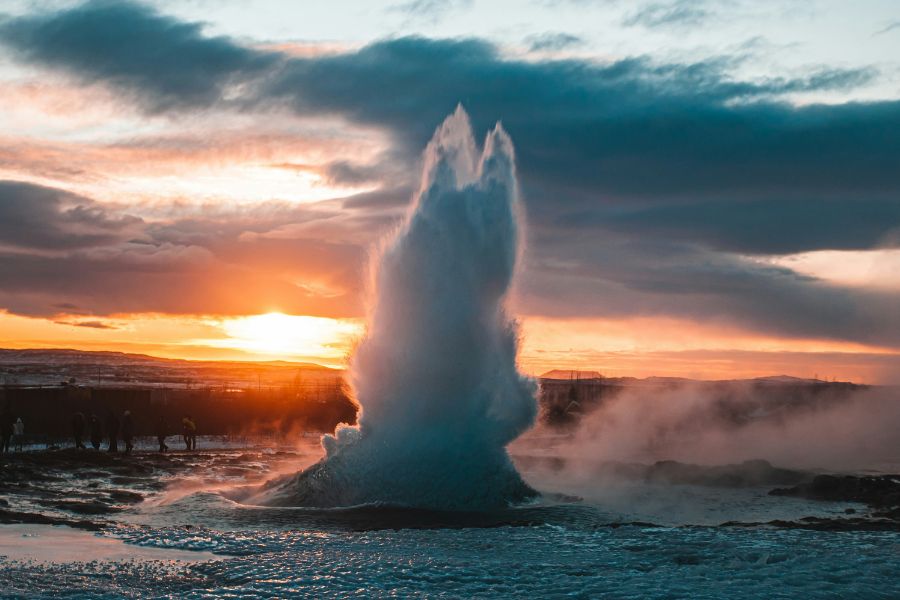
As Iceland is situated on the Mid Atlantic Ridge, where the North American and Eurasian tectonic plates meet, this results in an abundance of geothermal activity such as these impressive geyser’s.
Kerið Crater
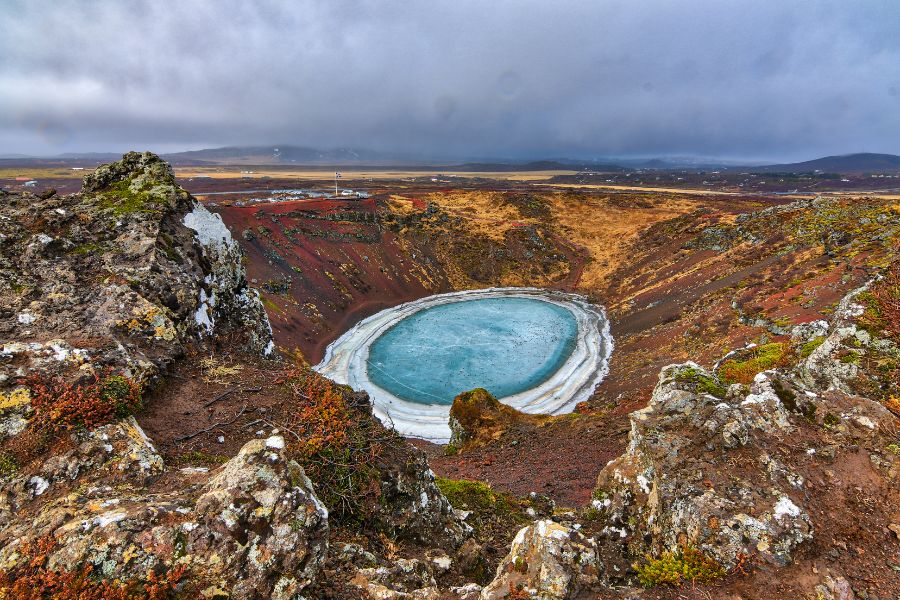
Kerið Crater is a volcanic crater known for its vibrant red and orange colours and its bright blue lake in the middle. It’s a quick stop on the golden circle tour but defo worth a peek.
Seljalandsfoss
You can actually walk behind the waterfall, into a cave like area you’ll be behind the roaring power of the water surging down off the edge of a cliff that was formed by volcanic activity. It’s truly a special place and one not to be missed.
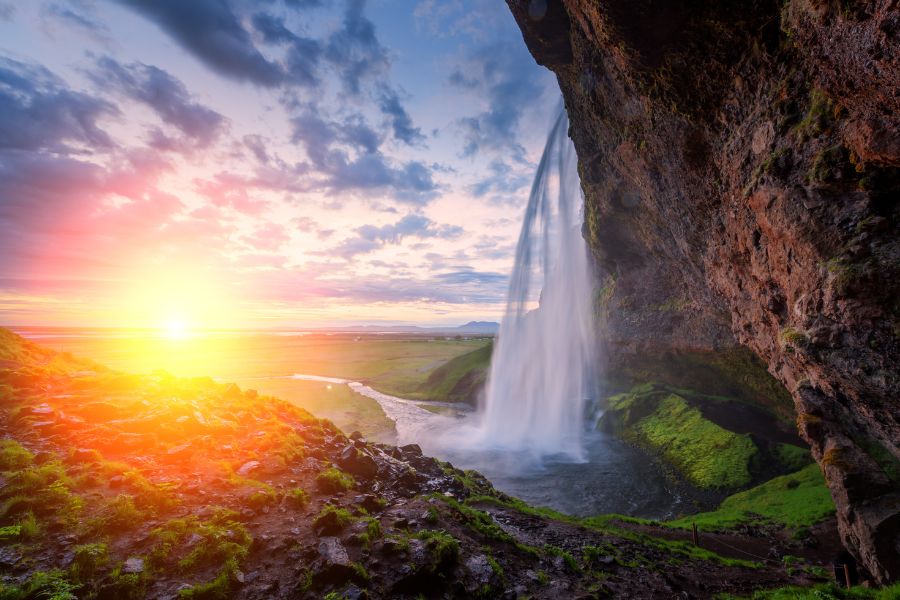
Seljalandsfoss isn’t actually on the golden circle route, but it totally should be. Iceland is known for its waterfalls and this one is magical and certainly a favourite of ours.
Skógafoss
Again Skógafoss waterfall isn’t on the classic golden circle route but if you’ve made it to Seljalandsfoss then you only have to drive a little further down the road and you’ll find yourself at the dramatic Skógafoss! It’s the most impressive waterfall we’ve ever seen, you can walk up the stairs and get the views from the top of the waterfall.
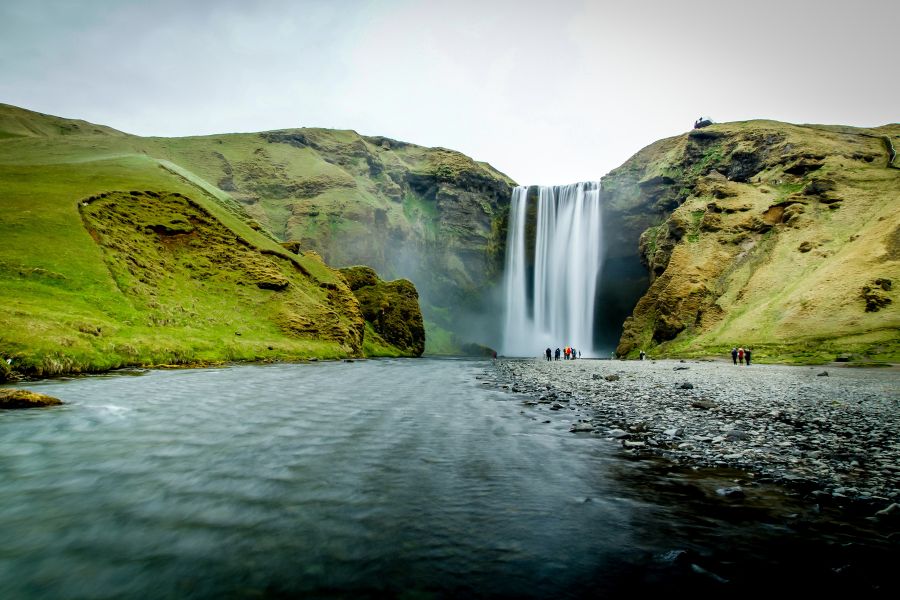
There’s also some epic hiking trails that start from there, such as the Fimmvörðuháls Trail, this 25km hike is the most renowned, it takes you from Skógafoss to Þórsmörk, you’ll be crossing the Fimmvörðuháls pass between the Eyjafjallajökull and Mýrdalsjökull glaciers.
The Kvernufoss hike is for those wanting an easier less strenuous hike, a nice 6km trail taking you to the Kvernufoss falls and back. A truly stunning walk and another waterfall you can walk behind but less touristy, that’s always a win!