
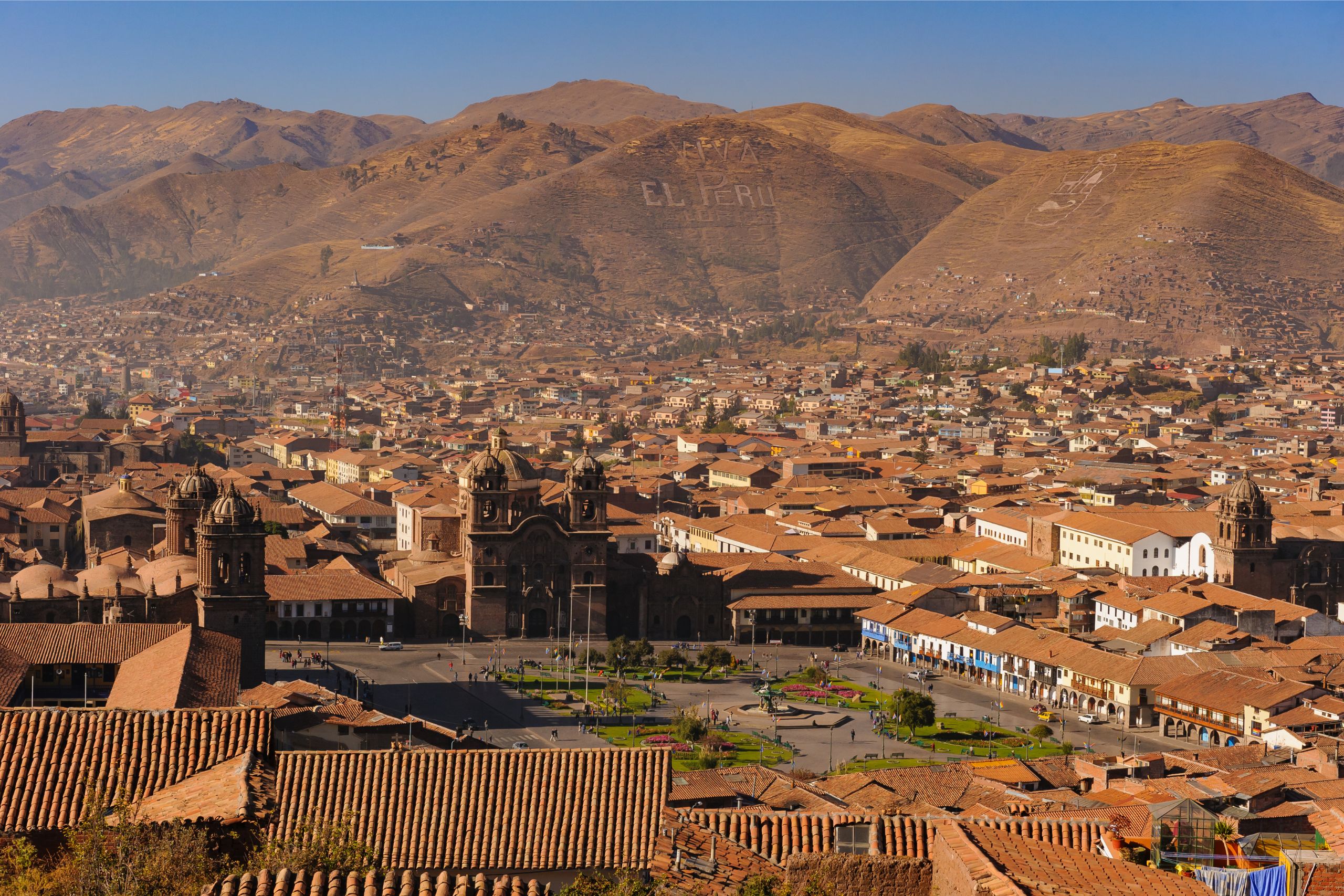

Nestled high in the Peruvian Andes, Cusco is a city like no other, once Capital to the Inca Empire, it’s cobblestoned streets are filled with ancient secrets and history, waiting for you to discover the tales of powerful Inca’s and be apart of the enchanting festivities.
Cusco, occasionally spelled Cuzco or Qos’qo (as pronounced in Quechua, the ancient language of the Incas still spoken by millions in the Andes today), is a profoundly historic city. Its capture by the Spaniards in 1533 marked the end of the Inca Empire.
The vibrant colours of its bustling markets and the majestic presence of its grand colonial churches create a captivating contrast against the backdrop of verdant hills and mist-kissed peaks.
As you wander through the city you’ll encounter the rich legacy of its Incan heritage intertwined with its vibrant modern spirit, making Cusco an unforgettable destination where past and present dance in perfect harmony. It’s easy to understand why Cusco is a UNESCO World Heritage Site.
Exploring the city can literally take your breath away as it sits over 3,000 meters above sea level, during the initial days while you acclimatise be sure to take it easy and drink or chew lots of Coca leaves. The highest point in the city is the Inca fortress of Sacsayhuaman (pronounced somewhat like “sexy woman”), sits at 3,700 meters (approximately 12,100 feet).
Best Time of Year to Visit Cusco
There are mainly two seasons, the dry season goes from May to October and the rainy season from November to April.
June and July are the driest and coldest months in Cusco. During these months, daytime temperatures can feel pleasantly warm due to the intense sunlight, while nights are often extremely cold, frequently dipping below freezing. Daily temperatures in Cusco can range from 0°C to 25°C, with the warmest temperatures typically occurring around noon.
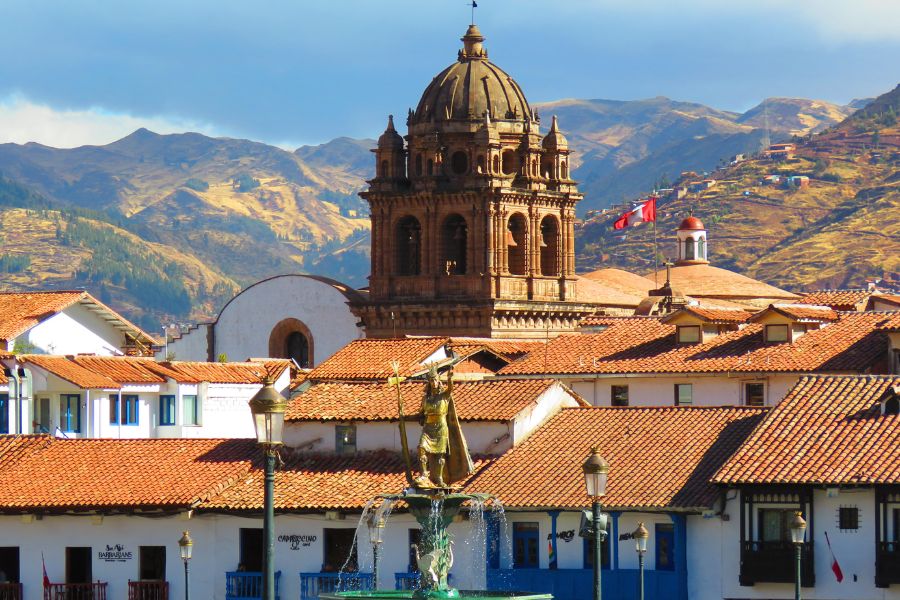
The best time of year to explore Cusco is during the dry season, one month impaticular is the most important and if you can time your trip to visit in June, you’ll be able to witness the incredible festivities throughout the month.
June the Jubilee Month
The whole of June is Cusco’s festival month, the city comes alive to celebrate it’s cultural and ancestral roots, bursting with colour, dancing, joy and music. It’s an incredible experience to witness the city honour it’s culture and history, watching the parades and all the dancers is mesmerising.
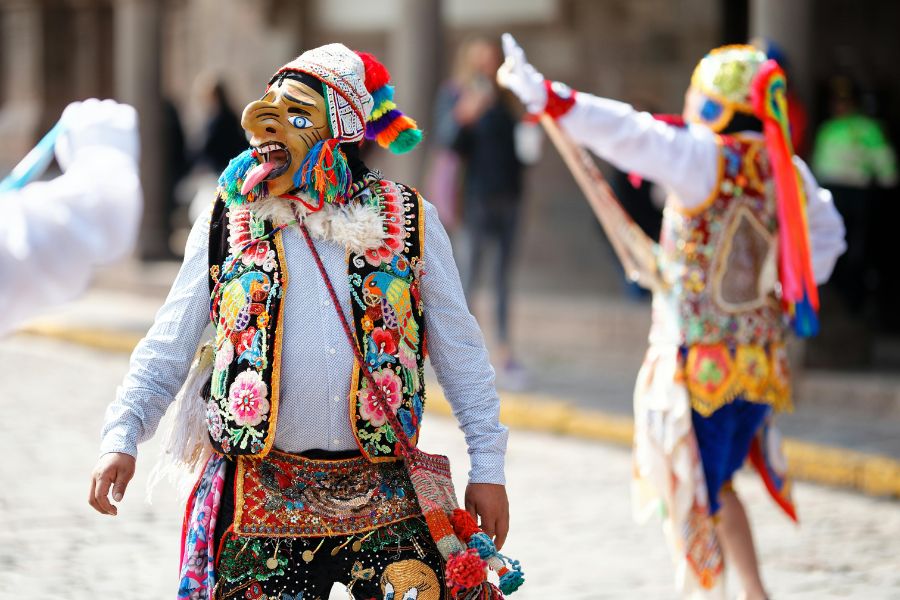
There’s pretty much something happening everyday in June, from the Pachamama offering to the Corpus Christi Procession, there’s always something going on and it is truly magical. It all seems to build up to the grand finale at the end of the month, the Inti Raymi festival!
Inti Raymi- Festival of the Sun
Inti Raymi is an ancient Inca festival, dedicated to Inti, the sun god, it marks the winter solstice and the beginning of the Andean new year, it is held on 24th June.
The festival features grand ceremonies, including a dramatic reenactment of Inca rituals at the Sacsayhuamán fortress. You can watch the opening ceremony at Qorikancha Temple and the second ceremony at Plaza Mayor known as “Encounter of Times and Coca Leaf Ceremony”, the earlier you get there the better spot you will have!
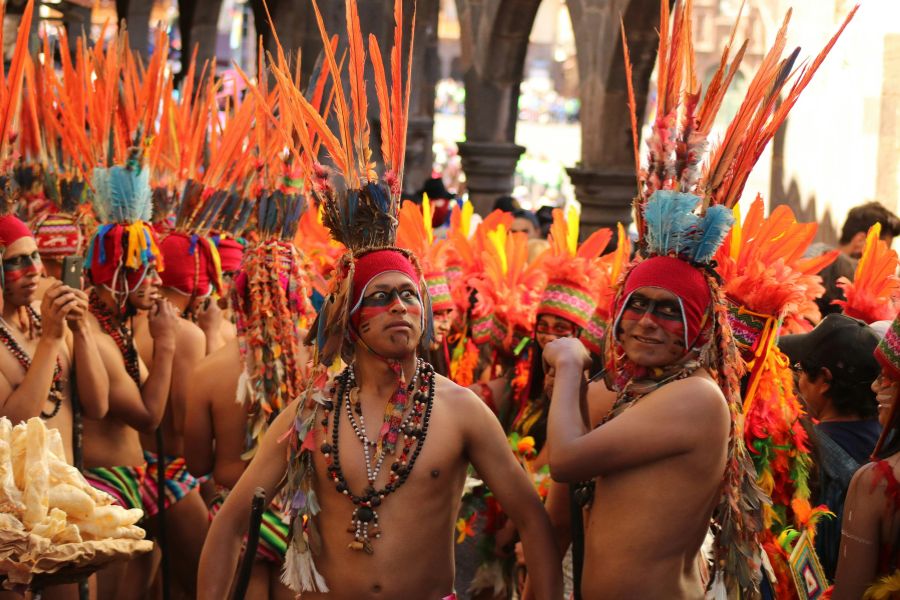
The third act takes place on the Chukipampa esplanade at Saqsaywaman, the heart of the Inti Raymi celebration. Here, you will experience the “chica” ritual and the symbolic llama sacrifice ( they act this part out and no animals are actually harmed). You do need to book tickets to watch the ceremony at Saqsaywaman, make sure you book them in advance as they sell out fast.
Participants wear colourful, traditional costumes and perform traditional dances and music, honouring the sun’s vital role in their culture. Inti Raymi is a vibrant celebration of Inca heritage, community spirit, and the enduring connection between the people and their ancestral traditions.
How to get to Cusco
By Air
Although a few international flights land directly at Cusco’s Velasco Astete airport, most visitors first arrive in Lima and then transfer to a connecting flight to Cusco. This flight takes approximately an hour and typically costs around $100 USD for a one-way ticket.
Direct flights are also available between Cusco and several major cities in Peru, with Latam and StarPeru being the primary airlines operating these routes.
Flying into Cusco’s Velasco Astete airport is truly unforgettable. We took an early morning flight from Lima that landed shortly after sunrise, allowing us to wake up on the plane and gaze out at the vibrant orange glow over the dramatic Peruvian Andes. It was a breathtaking experience we’ll always remember!
By Bus
You can also reach Cusco by bus from various cities across Peru. The journey from Lima takes about two days, while it’s around one day from Arequipa, six hours from Lake Titicaca, and roughly eight hours from La Paz, Bolivia.
Bus options range from budget-friendly “chicken buses” costing just a few dollars to more luxurious double-decker buses with fully reclining seats. For instance, one-way tickets between Cusco and Arequipa are approximately $60 USD.
What to see and do in Cusco
The Main Square – Plaza Mayor de Cusco
The Incas viewed Cusco as the ‘centre of the world,’ and its main square reflects this significance, serving as the city’s core for economic, social, and cultural activities.
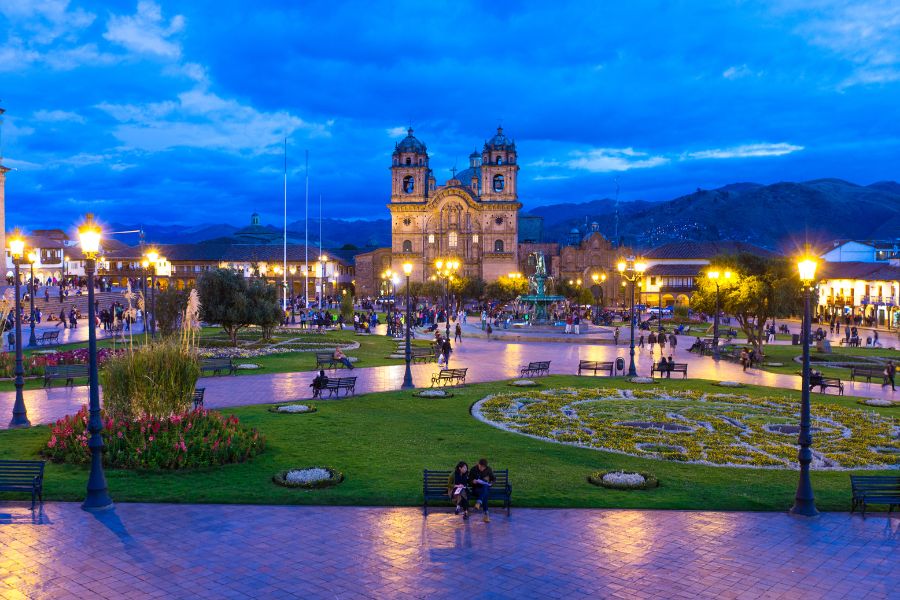
With the cathedral standing prominently on one side, you’ll want to spend time exploring the square and its surroundings. Enjoy a cup of coca tea at one of the many restaurants, cafes, or bars, and interact with the locals. You might see cholas (women in traditional Andean dress) offering photo opportunities with their fluffy alpacas for a small fee. We personally never did this as we don’t agree with using animals for tourism, I really wanted to cuddle one though and it take it with us.
Qorikancha
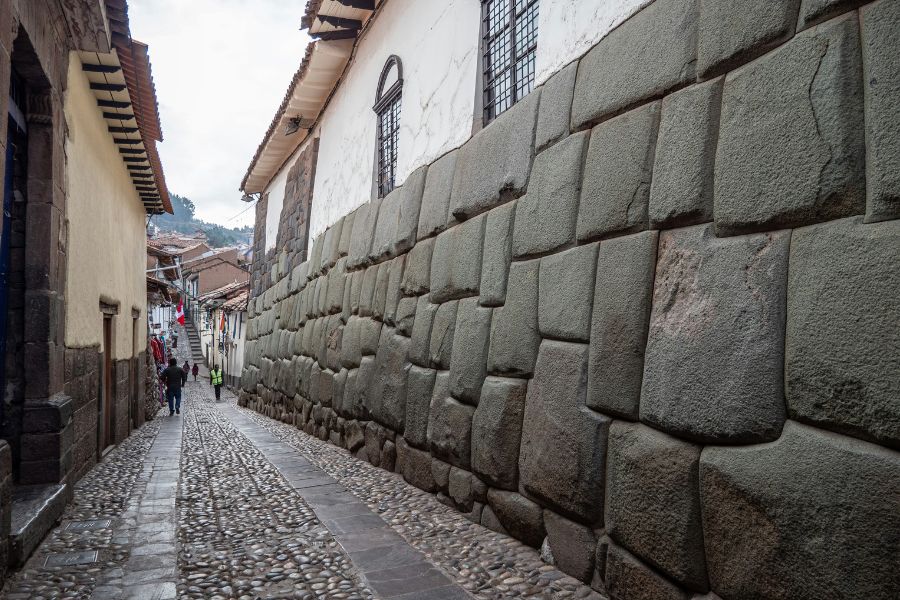
Qorikancha, also known as the “Golden Courtyard,” was the most significant temple in the Inca Empire, dedicated to Inti, the sun god. It was renowned for its opulent gold decorations and exceptional stonework, featuring intricately cut stones that fit together without mortar. The temple was a symbol of Inca religious and political power, reflecting the empire’s wealth and devotion.
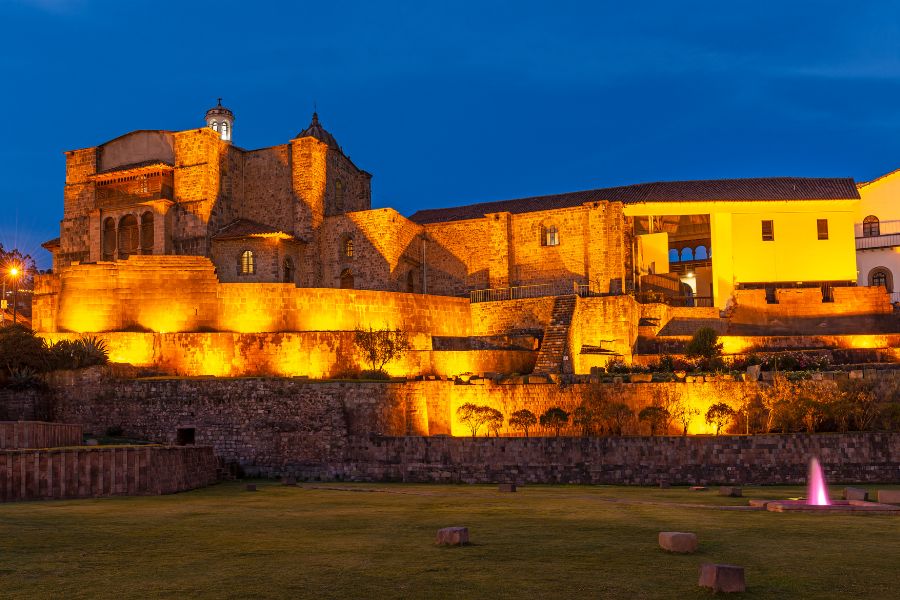
Following the Spanish conquest in the 16th century, Qorikancha was heavily damaged and looted, with much of its gold taken and the structure repurposed for Spanish colonial buildings. The Santo Domingo Church and Convent were constructed on its ruins, incorporating the original Inca walls into its foundations.
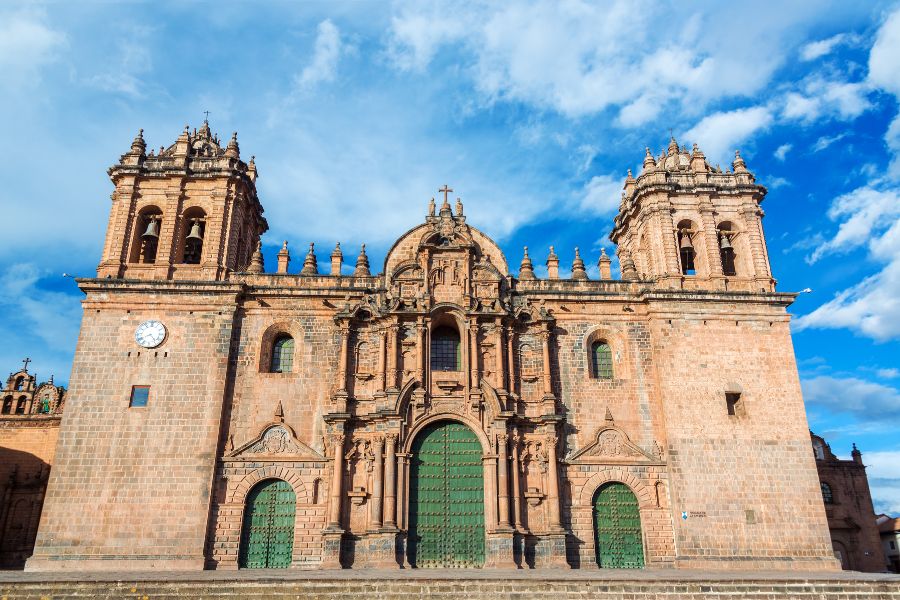
The Cathedral
Built on the site of an Inca Palace, the cathedral showcases colonial art including the famous depiction of the Last Supper featuring a roast guinea pig, a traditional Andean dish. This unique element provides a striking example of how Christianity blended with indigenous customs in the New World.
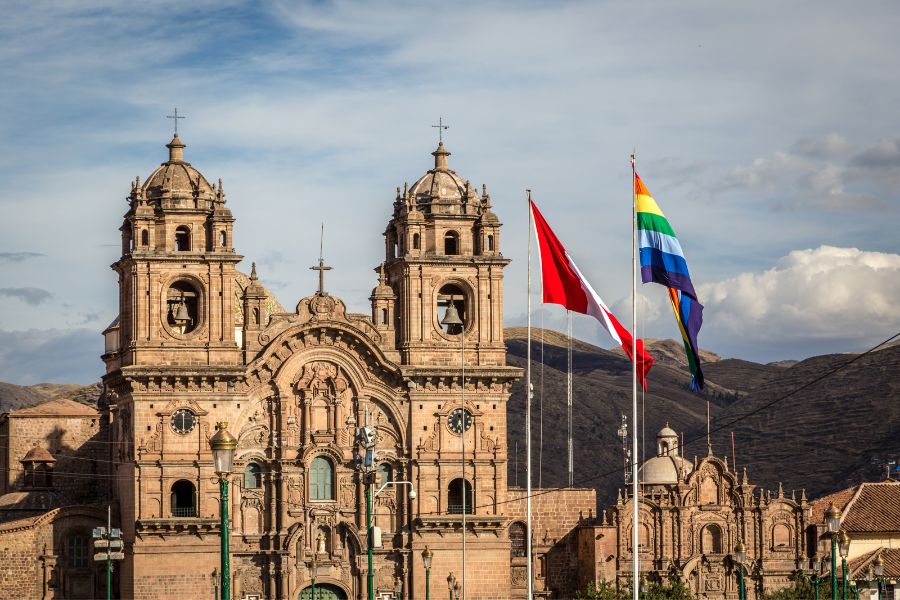
Iglesia de la Compañía de Jesus
Just a short distance from the Cathedral stands this breathtaking church, constructed by Jesuits in the 16th century and later rebuilt after a 17th-century earthquake. It was erected on the ruins of Huayna Capac’s palace, the last Inca emperor to preside over a unified Inca Empire
Museo Machu Picchu
This relatively new museum houses hundreds of Inca artefacts collected by Hiram Bingham, the American explorer who “discovered” the renowned Inca citadel in 2011.
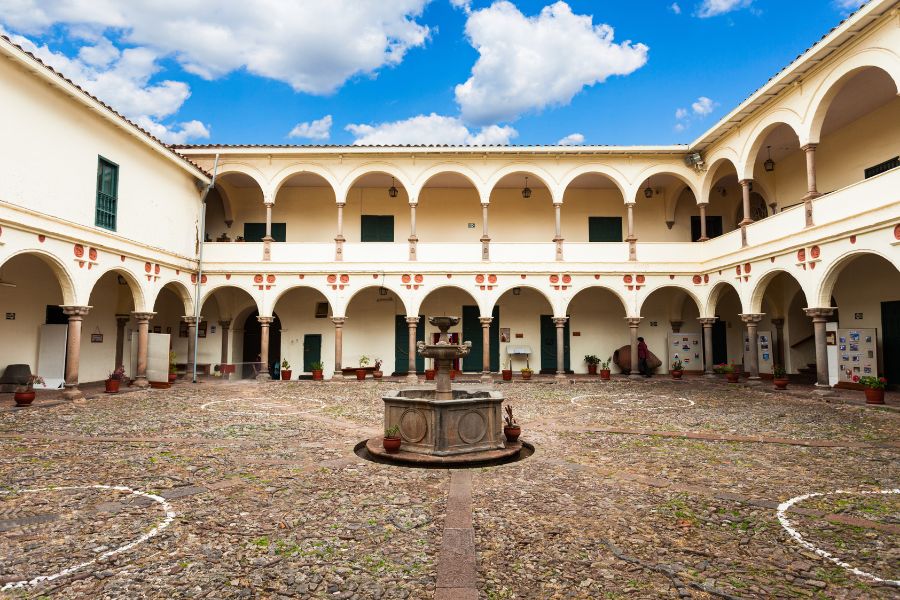
These artefacts, recently returned to Peru from Yale University, are accompanied by exhibits detailing Bingham’s expeditions, they also served as inspiration for the Indiana Jones films!
Sacsayhuaman
Perched above Cusco, this Inca fortress is an essential stop on any city itinerary, no matter how short. It’s a steep 30 minute hike from the main square, or a 10-minute taxi ride (we got a taxi up and walked down).
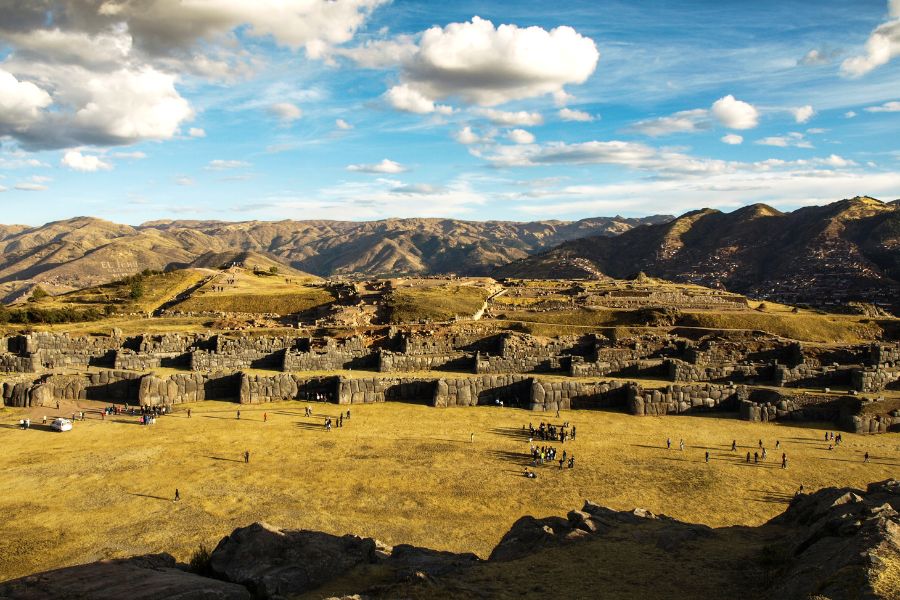
Sacsayhuaman is an excellent spot to admire the Incas’ remarkable stonemasonry, featuring massive, irregularly-shaped granite blocks assembled without mortar.
The craftsmanship is so precise that even after centuries, you couldn’t fit a penknife blade between the stones.
Tambomachay, Q’enko, and Puka Pukara
These three Inca archaeological sites are all approximately a 20-minute drive from Cusco city centre, and even closer to Sacsayhuaman. Each site is unique and set amidst stunning natural landscapes. Despite their proximity to Cusco, they are rarely visited, especially early in the day.
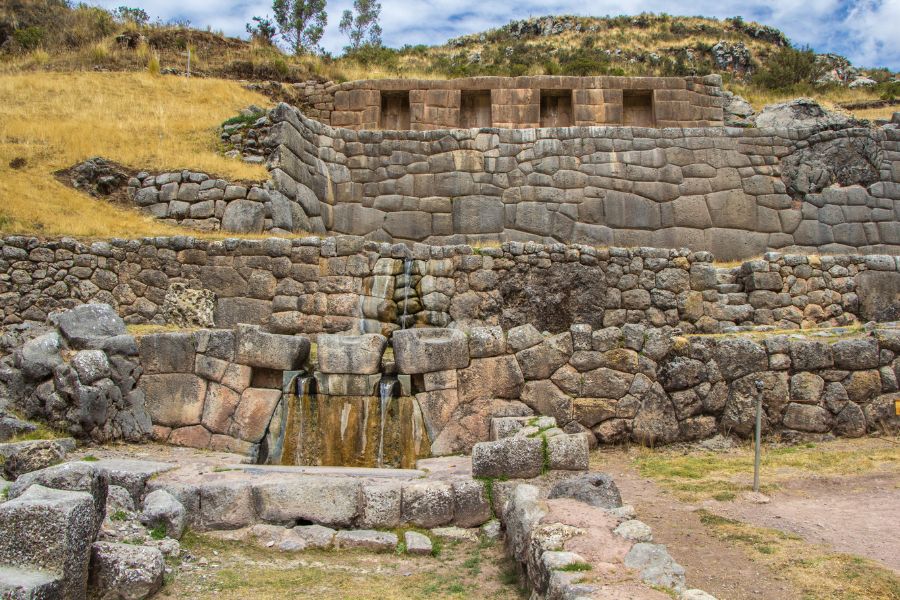
If you have an interest in the Inca empire or archaeology, they are definitely worth exploring. Although reaching them from Cusco requires an uphill walk, the return journey is a scenic, downhill trek that takes about 1.5 hours.
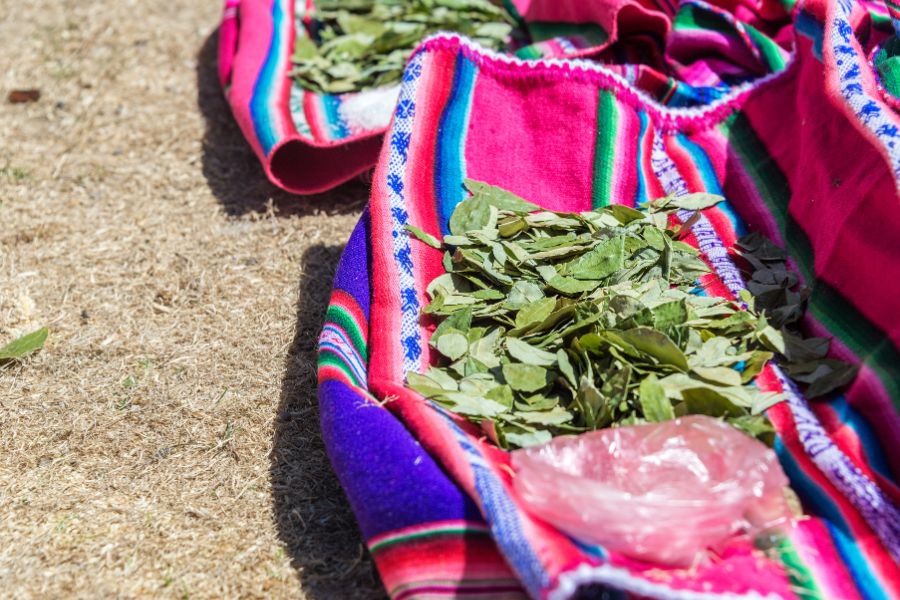
Museo de la Coca
A small yet intriguing museum explores the traditional uses of the coca plant among Andean cultures. It contrasts these historical uses with coca’s more controversial modern role as the primary ingredient in cocaine—a substance first synthesised by a 19th-century German chemist and for which Latin America continues to bear a significant burden.
Museo Inka
This compact museum is an excellent spot to learn about the Incas. Located just a block from the main square, it features a rich collection ranging from gold jewellery to mummies. Unlike many Peruvian museums, it offers detailed and engaging information that thoroughly explains its exhibits.
Explore San Blas
The San Blas neighbourhood begins at the edge of the Plaza de Armas and ascends steeply uphill, you’ll feel the burn that’s for sure, but it will be worth it. This area boasts some of Cusco’s finest hotels, creative restaurants, stunning architecture, and a variety of cafes, lounges, and bars.
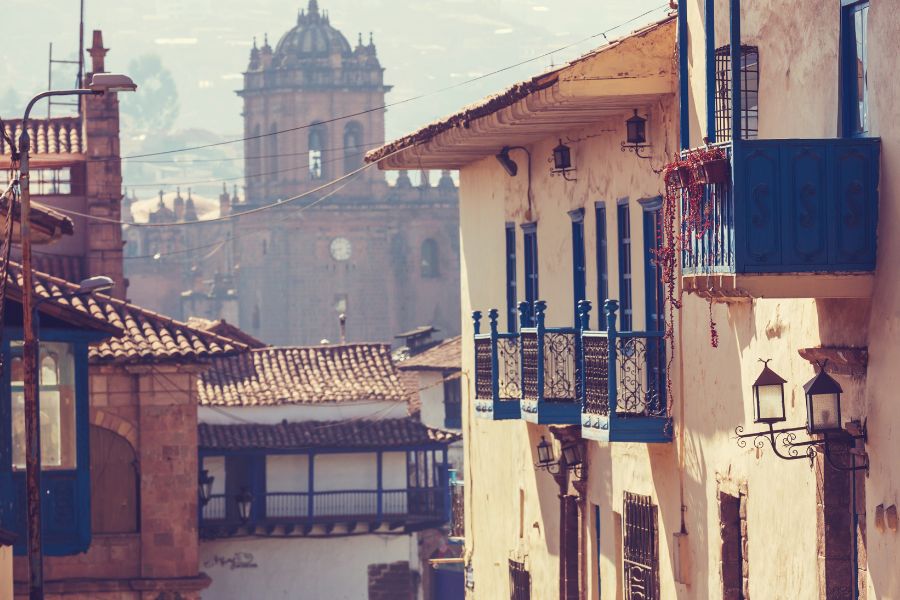
It is also a hub for crafts, where you can glimpse workshops creating ceramics, furniture, and wooden picture frames as you explore. San Blas features numerous viewpoints that offer breathtaking views of the city.