


Having a strong, reliable internet connection is essential for every digital nomad and remote worker.
Having a good internet connection is non negotiable, you could travel far and wide to arrive at your destination, but if the internet isn’t good enough for you to work, it’s back to the drawing board.
The reality is, it’s not always easy finding that stable connection that we need and it can be problematic when you’re always on the move.
Thankfully, there are other ways to insure you can always connect, from even the most off- grid parts of the world, be it the Sahara Desert or the Arctic Circle, you can be sure to always have a solution to your remote working needs!
That’s why we’ve created this list to share with you the best 5 internet solutions guaranteeing you a WiFi connection no matter where you are in the world.
So let’s delve into the pros and cons and share with you these useful tips to get you working remotely!
1. Portable WiFi Devices
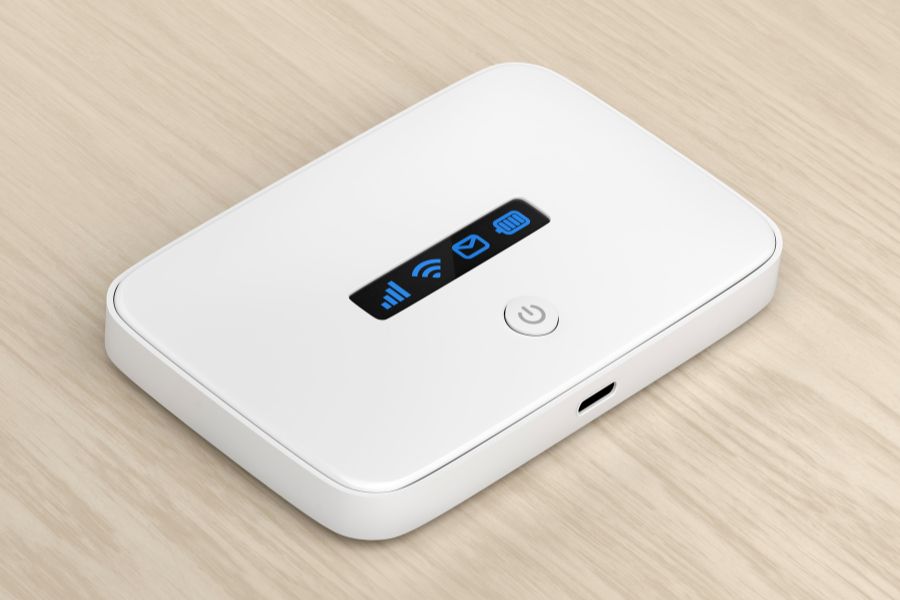
These devices, are fantastic for their compact and lightweight abilities, they’re known for their fast speeds and multi-device connectivity regardless of local infrastructure, making a go to for many digital nomads and remote workers.
You’ll find many options online, but here’s a couple that we recommend.
If you are looking for a reliable WiFi router, we can vouch for the Huawei E5577 ,we have used this router all around the world and it has never let us down.
Another more expensive option would be the Netgear Nighthawk routers. Also compact and reliable just a little more on the pricey side, you can get a Nighthawk M1 from $199.
Both come with a SIM card slot and an internal battery, making them perfect to use both plugged in or as a wireless device.
However, if you want a budget-friendly and efficient option, then the Huawei E5577 is the way to go. It only costs £65 and has never failed to pick up signals, even in remote locations, we were always able to connect.
2. Mobile Phone Hotspot

Transform your smartphone into a portable WiFi by using local SIMs or multi-country eSIM data plans.
When your accommodation or local cafes aren’t coming through ,you can always rely on the old school hot spot!
Grabbing a local SIM card will give you affordable prepaid data to broadcast speedy 4G and 5G internet to your devices.
Another option would be eSIMs, you can instantly activate high-speed international packages without any annoying roaming limits or SIM-swapping physical SIM cards.
When your usual WiFi lets you down due to bad weather and power cuts, transform your smartphone into a portable Wi-Fi router with local SIMs and multi-country eSIM data plans and enjoy the convenience of staying connected wherever you go!
3. Coworking Spaces

Shared workspaces offer all the amenities you need for bandwidth-intensive remote work, and you can access them for as low as $5 per day in some parts of the world.
Each Coworking space varies in accessibility, amenities, available hours and internet speeds, these are things you’ll need to consider when finding the ideal working space to suit your needs.
Consider signing up for memberships if you’ll be in one place for a while, but don’t limit your options by signing up and restricting your freedom to change locations frequently.
Take the time to research various areas for Coworking spaces to ensure that you find the perfect on-demand workspace that meets or exceeds all your remote work expectations.
To sum it up Coworking spaces are the ideal solution for digital nomads and remote workers who need a comfortable and productive workspace.
4. Satellite Network Internet

Among the satellite internet providers, Elon’s Starlink satellite network is the frontrunner in providing high-speed and low-latency internet that is perfect for van life, sailing, and off-grid adventures in remote locations.
To Starlink Roam, you can enjoy impressive download speeds of up to 200Mbps, which is comparable to cable and fiber connections.
The compact antenna dish connects wirelessly to your devices and provides extensive global coverage capabilities on the go.
Although there is a one-time hardware fee for the antenna kit that starts at $599, the monthly fees starting at $150 make it a cost-effective option for reliable internet in remote areas without cellular or radio tower connections.
While there are limitations to consider, such as restrictions on moving vehicles and dependence on open skies, Starlink offers groundbreaking feasibility for location-flexible remote workers to work and play anywhere on the planet.
5. Public WiFi Networks
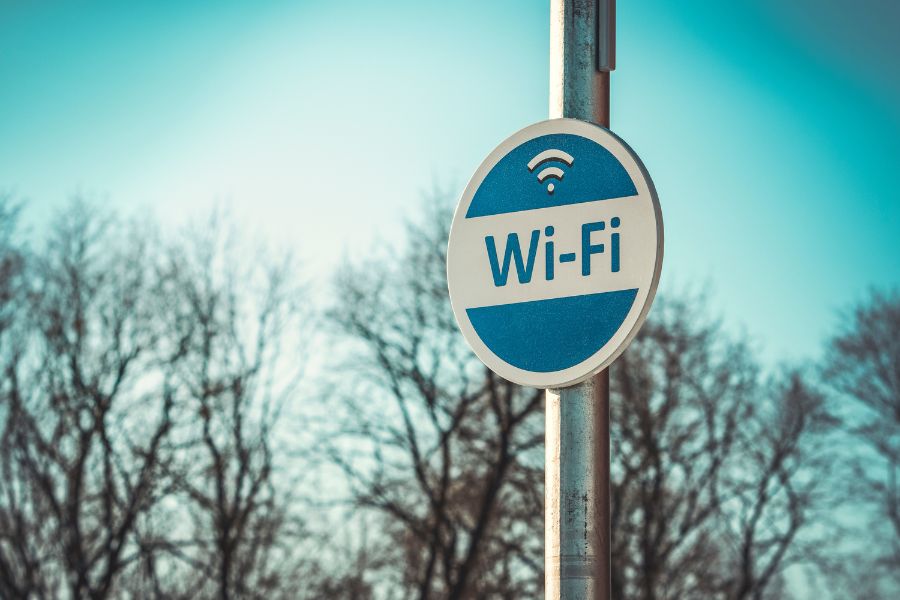
One of the most cost-effective ways to access the internet worldwide is through public WiFi networks. These networks are widely available in places such as cafes, hotels, hostels, libraries, and airports.
By connecting to these networks, you can avoid the need for expensive international data plans and instead access the internet through local infrastructure. Best of all, many of these networks are free to use.
However, public WiFi networks can be problematic due to several reasons. They are often slow due to a high volume of users, have unstable connections due to old wiring, and possess security vulnerabilities that can be exploited by hackers to steal personal information.
Therefore, having a reliable VPN is crucial to safeguard your privacy and personal data when connecting to public hotspots.